


![National Infantry Museum & Soldier Center [VISIT]](https://firearm-discounts.com/wp-content/uploads/2026/01/Visit-featured-scaled.jpg "National Infantry Museum & Soldier Center [VISIT]")

The National Infantry Museum was established in 2009 and is located on the grounds of Fort Moore in Columbus, Georgia. Before its closing in 2008, it was housed in the former Fort Benning hospital.
In 1998, the 501(c)(3) National Infantry Museum Foundation was formed to plan, raise funds for, and operate a new museum. The Foundation has since formally partnered with the Army to manage the facility.
The National Infantry Museum chronicles the story of the United States Army Infantry from the American Revolution to the present, featuring artifacts from all eras of American history. It covers 190,000 square feet with approximately 70,000 pieces on display and emphasizes the values that define the infantry: loyalty, duty, respect, selfless service, honor, integrity, and personal courage.
INTERIOR EXHIBITS
The Last Hundred Yards
As you enter, you’ll be in awe of the museum’s sheer size. After being greeted by the staff, you’ll walk toward the museum’s signature exhibit, “The Last 100 Yards.” As you travel up the sloped ramp, you’ll be fascinated by life-sized dioramas depicting significant battles in the infantry’s history, including Yorktown, Antietam, Soissons, Normandy, Corregidor, Soam-Ni, LZ X-Ray, and Iraq. The soldiers depicted in these scenes are not department store mannequins; they’re cast sculptures of active-duty soldiers who auditioned to represent their predecessors.
Fort Moore & Columbus Connections Gallery
As you exit the Last 100 Yards, the sound of a drill sergeant draws your attention. You’ll see the training transforming ordinary citizens into soldiers, from their first haircut to their midnight march. Besides basic training, you’ll learn about the advanced and specialized training located at Fort Moore, including Airborne, Ranger, Sniper, Pathfinder, and Officer Candidate School.
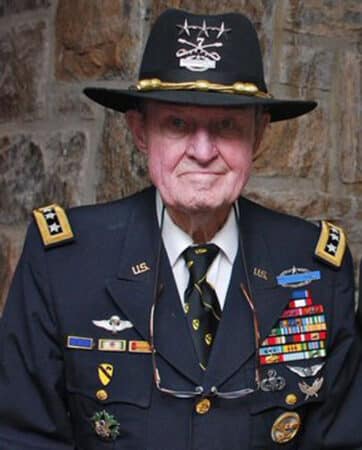
Securing Our Freedom/Defining The Nation: 1775-1889
As you enter this new 5,100-square-foot gallery, you will be transported to the years preceding the Revolutionary War and the end of the Frontier Indian Wars. Among the artifacts are various muskets and rifles, a 200-pound mountain howitzer used in the Mexican-American War, a Civil War-era James gun with its innovative rifling system, and the game-changing Gatling gun, forerunner of the modern machine gun.
The International Stage: 1898-1920
This gallery explains what drove Americans to join the rush to fight the Spanish-American War. One exhibit includes a porthole from the USS Maine, whose destruction is one of the events that started U.S. involvement in Cuba. Other exhibits include the Philippines campaign and the Boxer Rebellion expedition to defend U.S. business interests in China. Lastly, experience life in the trenches as a WWI Infantryman, surrounded by explosions of artillery and the sounds of passing tanks.
World At War: 1920-1947
This gallery tells the story of WWII and contains the museum’s most extensive collection of artifacts. You will follow the rise of the Axis powers and the Greatest Generation’s fight against fascism. You’ll see the equipment and weaponry that gave GIs the tools for victory. Other displays include various uniforms and personal items from both sides, including Audie Murphy’s service ribbons, Hermann Goering’s Field Marshall baton, and Emperor Hirohito’s sword collection.
The Cold War: 1947-1989
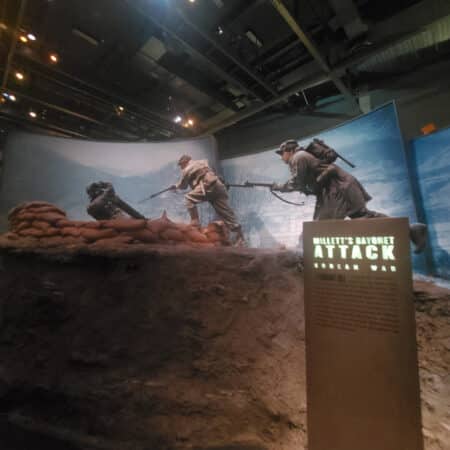
Tensions developed between the United States and the Soviet Union, starting after WWII. Although war was never declared, both sides engaged in proxy wars, with the U.S. trying to stop the spread of Communism. The Cold War gallery takes you from the initial period of post-WWII mistrust to the Korean War, where you’ll learn about the “forgotten war” and why the U.S. Army continues its presence in Korea today. During the Cold War, warfare doctrine and technology took on a whole new dimension with the deployment of theater-level nuclear weapons. One of our most famous artifacts is the M29 Davy Crockett, one of the smallest atomic weapons ever produced.
A Global Presence: 1989-Present
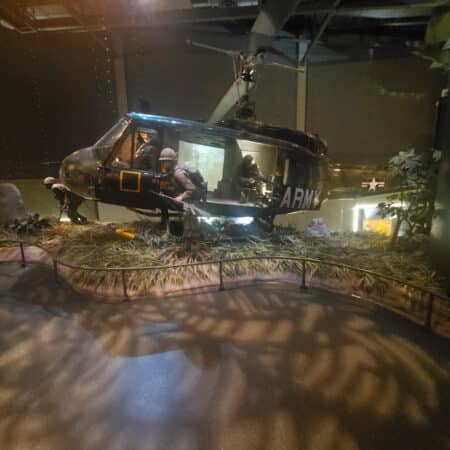
The United States has emerged as the predominant world leader and one of the only nations with the global reach to intercede in regional disputes and halt genocidal crises. This gallery chronicles U.S. involvement in Bosnia, Afghanistan, Iraq, and the Global War on Terrorism.
Ranger Hall of Honor
This gallery preserves the legacy of the U.S. Army Rangers and the nearly 200 Rangers who have been inducted into the Ranger Hall of Fame since 1992. A timeline describes the Rangers’ evolution and historical importance from World War II, Korea, Vietnam, and Grenada.
Armor & Cavalry Gallery
In 2011, the Armor School moved from Fort Knox, Kentucky, to Fort Moore. The Museum decided to loan them a 3,500-square-foot gallery space to display the artifacts of those who’ve served in Armored and Cavalry regiments until they raised enough money to build their museum. The Armor branch starts with the creation of the Continental Army’s first mounted regiment during the American Revolution. It then moves on to the first tank units and the foundational principles pioneered by the 7th Cavalry Brigade (Mechanized) in the 1930s. Armor units witnessed a large-scale expansion during WWII, and in 1950, the Army merged responsibility for armor and cavalry units into a single Armor Branch.
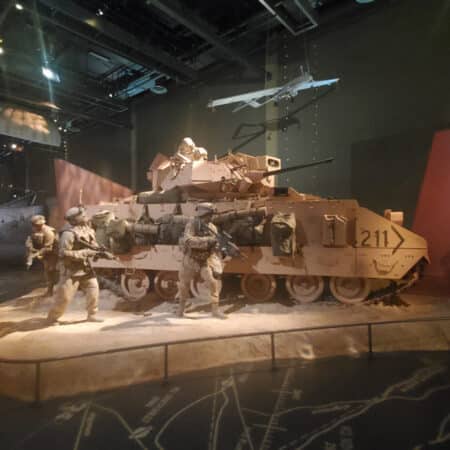
Patriot Park
Patriot Park houses several displays and monuments, including the Vietnam Memorial Plaza Inouye Parade Field, Heritage Walk, Global War on Terrorism, the Memorial Walk of Honor, and World War II Company Street.
World War II Company Street
World War II Company Street is a collection of buildings constructed on the post from 1940 to 1942 that have been refurbished to the condition they were in the 1940s, including a chapel, barracks, mess hall, orderly room, supply room, and sleeping quarters/ headquarters building used by Gen. George Patton while he commanded the 2nd Armored Division at Fort Benning before his deployment to North Africa in 1942.
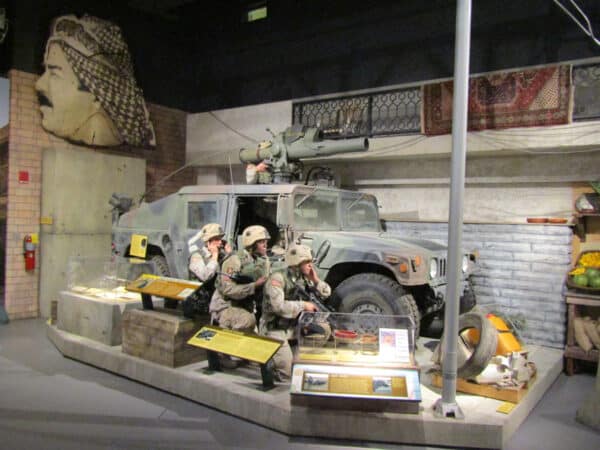
Global War on Terrorism Memorial
The Global War on Terrorism has claimed the lives of over 7,000 soldiers, sailors, airmen, and Marines. In honor of their sacrifice, the Global War on Terrorism Memorial was dedicated at the National Infantry Museum. The memorial includes granite panels engraved with the names of all service members who have given their lives in the GWOT. It consists of a 13-foot steel beam from World Trade Center Tower 1 presented to Fort Benning by New York City firefighters and nine bronze statues representing an infantry squad. This memorial is rededicated every year to add the names of the recently fallen.
Vietnam Memorial Plaza
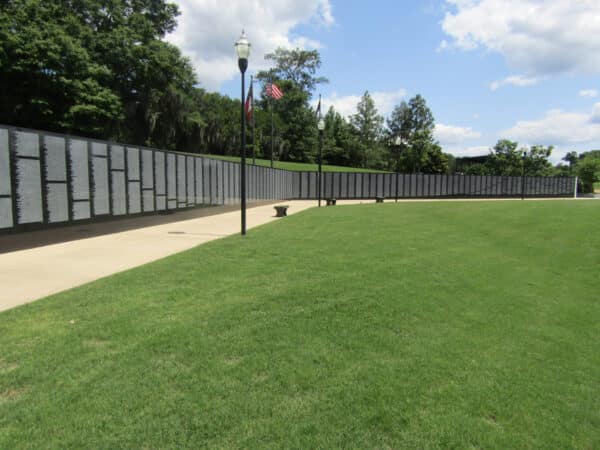
The Dignity Memorial Vietnam Wall has traveled throughout our country for those who didn’t have the opportunity to see the original Vietnam Wall in Washington, D.C. It’s now stationed at the infantry museum; it is a ¾ scale model with more than 58,000 names of patriots who gave the ultimate sacrifice.
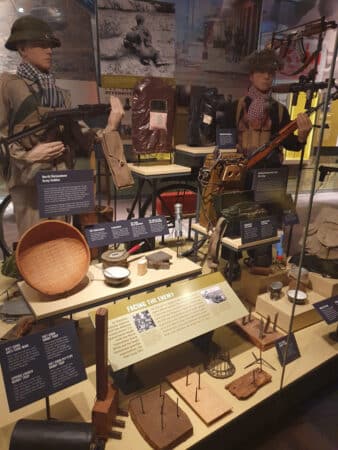
Inouye Field
Inouye Field is a five-acre parade field and stadium where new Infantrymen graduate every year. The field is seeded with soil taken from each battle depicted on the Last 100 Yards ramp, allowing every new soldier to walk on the sacred soil fought and died for by their forefathers in the profession of arms.
The Virtual Reality Center
The virtual reality experience lets you experience a simulated Non-Combative Evacuation Operation (NEO) mission, riding in a Humvee, flying in a Blackhawk helicopter as an infantry soldier, or skydiving into a free fall and gliding through different terrain.
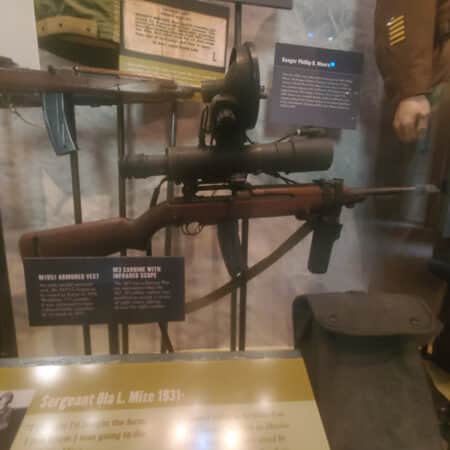
Fort Moore
In 1918, Camp Benning was established and named after Confederate General Henry L. Benning. In 2023, Fort Benning fell under the process of renaming military assets associated with the confederacy and was renamed Fort Moore in honor of LTG Hal Moore. During the Vietnam War, Moore commanded the 1st Battalion, 7th Cavalry Regiment, at the Battle of Ia Drang in 1965, detailed in the 1992 bestseller We Were Soldiers Once … and Young. Moore coauthored the book, which was made into the 2002 film We Were Soldiers, starring Mel Gibson as Moore. Hal Moore died in 2017 at the age of 94.
The National Infantry Museum is an absolute must for anyone interested in the history of the U.S. Army Infantry. With its thousands of artifacts and the stories behind them, plan on at least a full day to experience this gem. When you get tired, take a break at the Rally Point canteen or Fife and Drum restaurant, and before you go, browse through the Soldier Store for an outstanding collection of books and memorabilia to take with you.
Since our founding in 2012, RECOIL remains the premier firearms lifestyle publication for the modern shooting enthusiast. We deliver cutting-edge coverage of guns, gear, accessories and technology. We go beyond basic reviews, providing no B.S. buyer’s guides, hands-on testing and expert analysis on everything from firearms and survival equipment to watches and vehicles.
Our reviewers are the backbone of our operation and come from diverse shooting backgrounds: Former law enforcement, military veterans, competitive shooters, seasoned hunters and plain old firearms enthusiasts. Furthermore, we’re not just gun experts, but dedicated journalists who adhere to the strictest standards of our profession.
At RECOIL, editorial independence is the foundation of everything we publish and the cornerstone of reader trust. Our editors, writers and content creators make all editorial decisions independently, free from outside influence. That boils down to: advertisers don’t dictate our coverage, the outcomes of our reviews or what we recommend in our buyer’s guides. First and always, our commitment is to our audience—ensuring every review and article is accurate, unbiased, and driven by real-world experience.
Whether you’re selecting your next firearm, upgrading your gear, or exploring the latest innovations in the shooting world, RECOIL provides the trusted insights you need to make informed decisions. Learn more about our Editorial Standards and how we review products.

NEXT STEP: Download Your Free Target Pack from RECOIL
For years, RECOIL magazine has treated its readers to a full-size (sometimes full color!) shooting target tucked into each big issue. Now we’ve compiled over 50 of our most popular targets into this one digital PDF download. From handgun drills to AR-15 practice, these 50+ targets have you covered. Print off as many as you like (ammo not included).
Get your pack of 50 Print-at-Home targets when you subscribe to the RECOIL email newsletter. We’ll send you weekly updates on guns, gear, industry news, and special offers from leading manufacturers – your guide to the firearms lifestyle.
You want this. Trust Us.
Read the full article here

